Energy Storage
Battery Cathode Discovery
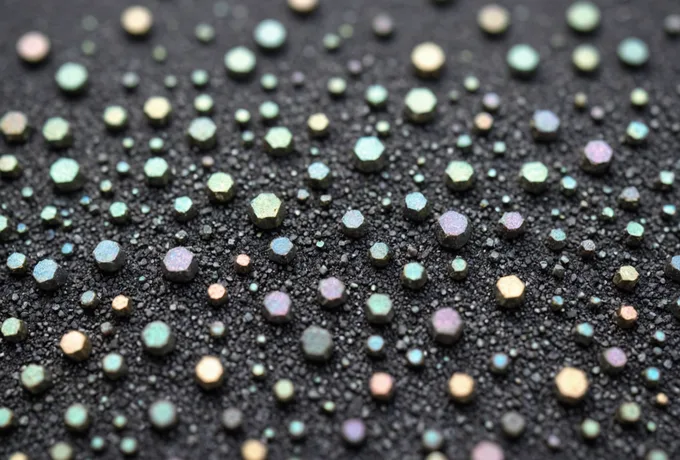
Screen layered oxides and phosphate frameworks for cathode candidates. Route the top-ranked structures to synthesis directly from the ranking queue.
AstraIQ ranks inorganic candidates with learned potentials and sends the survivors straight into an automated synthesis run, closing the loop.
Most inorganic R&D teams pass a shortlist from simulation to lab by email. AstraIQ replaces that gap with a direct pipeline from screening output to synthesis hardware input.
Upload your structure set or specify compositional constraints. AstraIQ generates enumerated candidates across the design space you care about.
Machine-learned interatomic potentials evaluate formation energies and stability proxies at millisecond speed, ranking candidates by synthesizability score.
Top-ranked candidates are dispatched automatically to connected lab hardware. Precursor weigh-in, thermal profile, and furnace scheduling happen without manual handoff.
Characterization data updates the screening model. Each run sharpens the next iteration, compressing the discovery timeline from quarters to weeks.
AstraIQ is not a general-purpose informatics dashboard. It does one specific thing: connect your MLIP screening run to your synthesis hardware, with feedback going back into the model.
Evaluate formation energy and structural stability for thousands of candidates per hour using fine-tuned machine-learned interatomic potentials.
Connect your lab hardware. Top-ranked candidates are dispatched with precursor lists, thermal profiles, and dwell times. No copy-paste, no email.
Characterization results flow back to the screening model automatically. Each run tightens the accuracy of the next iteration.
The screening-to-synthesis approach works wherever the candidate space is large, DFT is the bottleneck, and synthesis protocols can be expressed in structured parameters.
Screen layered oxides and phosphate frameworks for cathode candidates. Route the top-ranked structures to synthesis directly from the ranking queue.
Navigate complex multi-component oxide phase diagrams at speed. Identify stable compositions for dielectrics, refractories, and functional ceramics.
Explore intermetallic and high-entropy alloy compositions for mechanical performance. Narrow the synthesis shortlist before a single crucible is loaded.

Computational materials scientist focused on high-throughput DFT workflows and materials informatics for battery electrode discovery. Built the closed-loop automation architecture at AstraIQ.

Machine learning researcher specializing in equivariant graph neural networks for atomic systems. Responsible for MLIP model development and DFT benchmark pipeline design at AstraIQ.

Solid-state chemist and lab automation engineer. Years spent commissioning and running robotic synthesis platforms for high-throughput solid-state chemistry workflows.
AstraIQ connects to synthesis platforms via our open API. We support a growing list of automated furnace controllers, robotic weigh-stations, and characterization instruments. Contact us for a specific integration inquiry.
Our screening pipeline uses MLIPs as the primary filter for speed, with DFT spot-checks available on a configurable subset of top candidates. You control the validation budget and which properties trigger a DFT confirmation.
Early-access partners receive direct engineering support during integration, priority access to new MLIP model releases, and co-authorship consideration on any resulting publications. Capacity is limited.
We ship base models trained on large inorganic databases and offer fine-tuning on domain-specific DFT datasets. Battery cathode, oxide ceramic, and alloy families each have dedicated model variants.
We are taking on a small number of pilot partners. If your team is screening inorganic candidates and manually bridging the gap to the lab, we should talk.